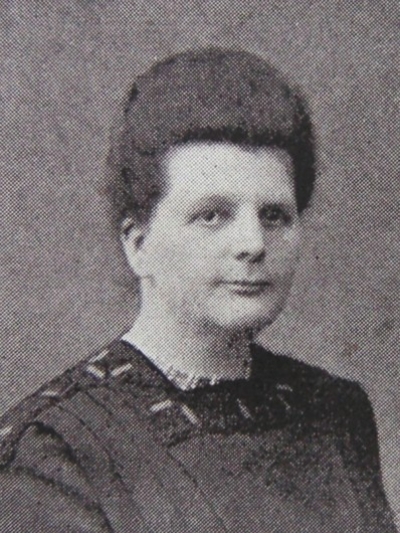
Betsy Kerlen (Johanna Maria Elisabeth Kerlen, 1859–1932) was a prominent Dutch feminist, educator, and a younger sister of the General (J.G. Kerlen). While the General was building a military career in the Dutch East Indies, Betsy became a leading figure of the first feminist wave in the Netherlands.
Genealogical Connection
-
Birth: She was born in Zutphen on September 30, 1859, the daughter of the shoe merchant mentioned in the memoirs.
-
Family Context: She was one of ten children. While her brother Nanning took over the father’s shoe business and the General entered the KMA, Betsy moved to Amsterdam in 1880 to pursue a career and social reform.
Historical and Feminist Contributions
Betsy Kerlen’s feminism was practical and focused on education, physical autonomy, and political rights:
-
Education and Art: From 1886 to 1916, she was the director of the Dagteeken- en Kunstambachtsschool voor Meisjes (Drawing and Applied Arts School for Girls) in Amsterdam. This school was a vital institution for professionalizing women’s art and craft, a precursor to the modern Gerrit Rietveld Academie.
-
Sport and Rational Dress: She was a pioneer for women’s rights to sport, which was then considered scandalous.
-
In 1886, she co-founded the Hollandsche Dames Zwemclub (Dutch Ladies Swimming Club).
-
In 1894, she helped found a mixed-gender cycling club, Allegro Moderato.
-
She was a key member of the Vereeniging voor Verbetering van Vrouwenkleeding (Association for the Improvement of Women’s Clothing), which advocated for “rational dress”—abandoning restrictive corsets in favor of clothing that allowed movement.
-
-
Political Rights: She was an active member of the Vereeniging voor Vrouwenkiesrecht (Association for Women’s Suffrage) and served as the president of its Amsterdam branch around 1900.
Geographical Legacy in Zutphen
Though she spent much of her adult life in Amsterdam and The Hague, her birthplace of Zutphen recently honored her legacy:
-
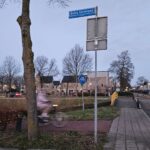
Betsy Kerlenpad: In 2024, a bicycle path in the Leesten district of Zutphen was officially named the Betsy Kerlenpad. The location is fitting, as she was a fierce advocate for women’s cycling and physical health.
Synthesis with the Memoirs
The General’s mentions of the family’s ambitious nature and their focus on education clearly extended to his sisters. While he was being disciplined at the KMA, Betsy was part of the generation that moved toward institutional leadership. Her work with the Dagteeken- school likely overlapped with the interests of Tesselschade-Arbeid Adelt, as both organizations sought to provide women with the skills and platforms to support themselves through refined labor and art.