
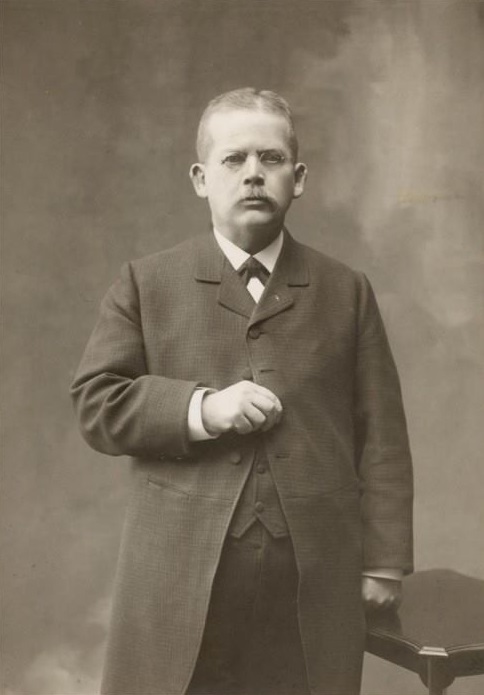
My great-great-grandfather (Johannes Godfried Kerlen) kept his memoirs. I am unsure where the original documents are but at some point these were copied and put into booklet form. I have a copy of those memoirs. The memoirs are in Dutch and with the help of my father’s cousin have been translated into English. I have started running these through AI to help clean up the grammar of these memoirs. I have also utilised AI to contextualise these memoirs and to analyse their genealogical, historic and geographical significance.
Below you can find the preface to his memoirs, and below that you will find these AI analysis. In the future you will be able to read his memoirs here.
Memories of My Life and Career
by Johannes Godfried Kerlen
Introduction
A short while before my 75th birthday, my children conceived a plan to give me a family gift. By chance, I discovered their idea was to present me with a radio installation. Now, I have somewhat of an aversion to the sound of a phonograph; no matter how perfected the radio may be, it still reminds me of that instrument, which I loathe.
Added to this was the fact that, due to my poor eyesight, I could no longer read or write. Therefore, if the radio were not playing, I would have to sit with my hands folded in my lap. I wondered, then, if a typewriter might better serve the purpose. I had never typed before, but since I could still distinguish the large letters on the keyboard, I imagined I could learn enough to keep myself occupied in the evenings with my children in the [Dutch East] Indies.
The day after my birthday, I began regularly keeping a sort of diary, which was closed every Friday and sent by mail to the Indies. I kept this up for four months, but in the end, it no longer satisfied me; I frequently lacked subject matter and began typing all sorts of trivialities and nonsense.
For that reason, I decided—without entirely neglecting my correspondence with the Indies—to record the memories of my life and career, in the hope of bringing this labor to a proper conclusion during my lifetime. I hope that my descendants may later look upon these memoirs with pleasure, to see what the “old General” experienced in his time.
Health to the reader!
The Hague, October 23, 1925
The Typist: J.G. Kerlen
You are looking at the Introduction to the personal memoirs of Major General Johannes Godfried Kerlen (1850–1928).
Written in The Hague on October 23, 1925, this text serves as a “prologue” to the life story you’ve been reading. It provides a very human glimpse into the transition from a high-ranking military career to a quiet, somewhat physically restricted retirement.
Key Takeaways from the Introduction
-
The Birthday Gift: For his 75th birthday, his children wanted to give him a Radio. However, the General reveals a grumpy, humorous side: he “loathed” the sound of phonographs and feared the radio would sound just as bad.
-
The Choice of a Typewriter: Because his eyesight was failing and he could no longer read or write by hand, he requested a typewriter instead. He taught himself to type (by looking for the “large letters on the keyboard”) so he wouldn’t have to sit with his “hands folded in his lap.”
-
Connecting with the East Indies: He initially used the typewriter to send weekly “diaries” to his children in Indie (the Dutch East Indies). After four months, he felt he was running out of “material” and writing “nonsense,” so he decided to write his formal memoirs instead.
-
“The Old General”: He explicitly states that he is writing this so his descendants can see what “the old General” experienced.
-
The Signature: He signs off with a bit of wit as “De Tikker” (The Typist).
Contextualizing the Author
This text confirms that the author is the elder Johannes Godfried Kerlen.
-
His Son: Johannes Godfried Kerlen (1883–1969), who was in the Indies at the time his father was typing these letters.
-
His Nephew: Gerardus Johannes Kerlen (the Utrecht police commissioner).
Significance of the Date
Writing in 1925, the General was looking back across a massive span of history. He had lived through the transition from horse-drawn carriages and sailing ships to the era of radio, flight, and—to his own frustration—the typewriter.
Translation of the Closing
The final lines are a traditional blessing to the reader:
“To the reader, Hail (Health)! The Hague, 23 October 1925 The Typist: J G Kerlen”
Genealogical Summary of the “Kerlen” Name
Based on the text and your research, here is how the primary figures in this family history connect:
| Name | Role in this Narrative | Relation to the General |
| J.G. Kerlen (1850–1928) | The Author / “The Typist” | The Patriarch |
| Gerrit Kerlen | Eldest brother; took over the shoe shop | Brother |
| Anton Kerlen | Second brother; managed the Arnhem branch | Brother |
| Cato Kerlen | Sister; household help and shop manager | Sister |
| J.G. Kerlen (1883–1969) | Living in the “Indies” in 1925 | Son |
| G.J. Kerlen (1890–1943) | Police Commissioner in Utrecht | Nephew |