
Personal Information
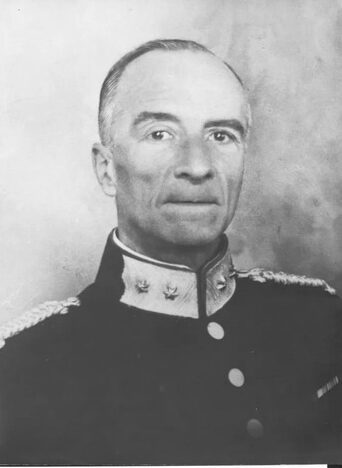
|
||
|
Name
|
Gerardus Joannes Kerlen 5

|
|
| Born | 03/08/1890 | Zutphen, Netherlands |
| Gender | ♂️ Male | |
| Died | 03/09/1943 | Utrecht, Netherlands |
| Notes | ||
|
Source: https://permalink.geldersarchief.nl/886C27E31A0A4385A3C930150416CCF6
|
||
Parents ( 1 )
|
Father
|
Gerardus Johannes Kerlen 4 | |
| Mother | Aaltje van der Plas | |
| Married | 06/02/1878 | Zutphen, Netherlands |
Spouses ( 1 )
|
Spouse
|
Hendrike Gretha Alberdine Ufkes | |
| Married | 26/02/1913 | Breda, Netherlands |
Spouses ( 2 )
|
Spouse
|
Alida Jozina IJperen | |
Events
📍 Zutphen, Netherlands
📍 Utrecht, Netherlands
Additional Information
|
Additional Info
Gerardus Johannes Kerlen (1890–1943) was a high-ranking Dutch police official and Nazi collaborator during the German occupation of the Netherlands. He is historically significant as the highest-ranking police officer assassinated by the Dutch resistance during World War II. Early Career and BackgroundBorn on August 3, 1890, in Zutphen, Kerlen initially pursued a military career:
Chief Commissioner of UtrechtIn August 1942, Kerlen was appointed Chief Commissioner of Police in Utrecht. His tenure was defined by strict adherence to Nazi ideology:
Assassination by Truus van LierKerlen's brutal tactics and his direct role in the persecution of the local population made him a primary target for the resistance.
Historical LegacyIn modern Dutch history, Kerlen represents the extreme end of wartime collaboration. Conversely, the spot where he was killed (and the nearby Truus van Lier-bridge in Utrecht) has become a symbol of Dutch resistance. Recent biographies and historical projects, such as Jessica van Geel’s Truus van Lier, have shed new light on the life of his assassin and the impact of Kerlen's regime on the city of Utrecht. |